
UK Steel Forging Company
What is Forging?
The forging process involves re-shaping material into a pre-determined design by pressing a pre-heated material into a tool or die so that the material disperses and as the material cools, re-solidifies into the shape of the mould. Forging can be performed at different temperatures depending on the material and desired properties.
Hot forging is completed above the metal’s recrystallisation temperature. This makes it easier to shape large components and achieve high levels of deformation but with less force. Cold forging is performed at or near room temperature, which can produce parts with tighter tolerances, but typically requires greater force to shape the material.
The main advantage of hot forging as a production process is that it produces a stronger piece of steel when compared to cold forging and alternative metal manufacturing methods like casting. It is one of the world’s oldest known metalwork processes dating back to at least 4000 BC to produce hand tools and weapons.
There are many different types of hot forging, including:
Find out more about forging with B.B. Price.
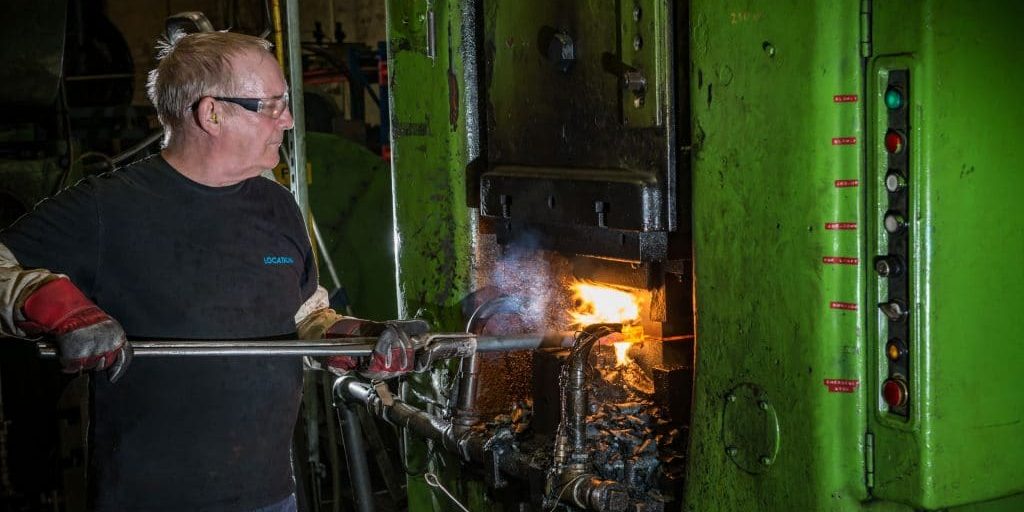
Custom Forging Solutions Offered at B.B. Price
Drop forging
Drop forging is achieved by compressing pre-heated material between two dies. Typically, the top die is forced down by a highly forceful press which causes the heated material to disperse and ultimately fit the shape of the die.
As it cools, the material regains its rigidity providing increased strength to the re-formed shape.
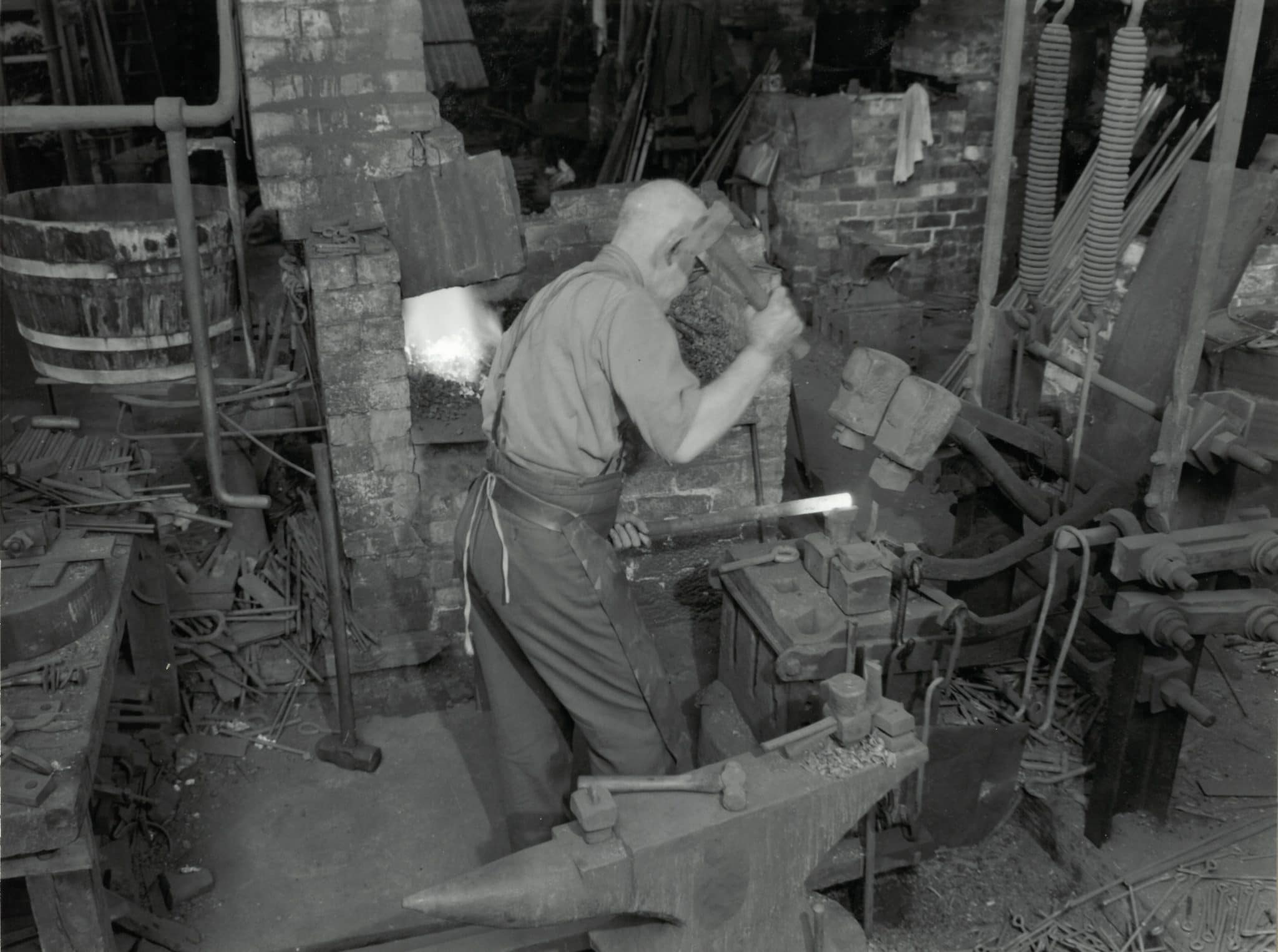
As the name suggests, hand forgings are performed by skilled workers by hand. Often, low value, bespoke products can be produced more cost effectively using this method due to the high set up costs of the other methods which usually require bespoke dies to be made before production commences.
Hand forging may cover a variety of processes but includes bending a heated bar into shape by manually forcing it around a generic pole or mould to re-shape the material.
Upset forging, also known as ‘heading’, is achieved by positioning a preheated bar into a groove to hold it in place. Pressure is then applied, forcing the end of the bar into a die to deform it into the shape of the mould.
Multiple upsetting dies may be used within a set to achieve the final shape. Shaped bars may also be subject to further hot forged processes for additional shaping.
History of Forging
The trade of forging is known to date back to at least 4000BC, some scientists argue it even pre-dates 4500BC. This ages the forging process at over 6,000 years old! It’s fair to say that production processes have changed quite significantly over that time but the basic principles of the process largely remain the same.
In the early ages of mankind, fire was often feared due to its destructive powers and the devastation that can be caused if it is not controlled properly.
Over time, mindsets towards fire changed from a thing to be fearful of towards a useful resource and subsequently early humans became more experimental of its use. They found that metals such as gold, silver and copper could be reshaped using the heat provided from small wood fuelled fires and heated rocks to heat the metals.
This discovery in the land of Mesopotamia (between the Tigris and Euphrates) gave birth to the forging process.
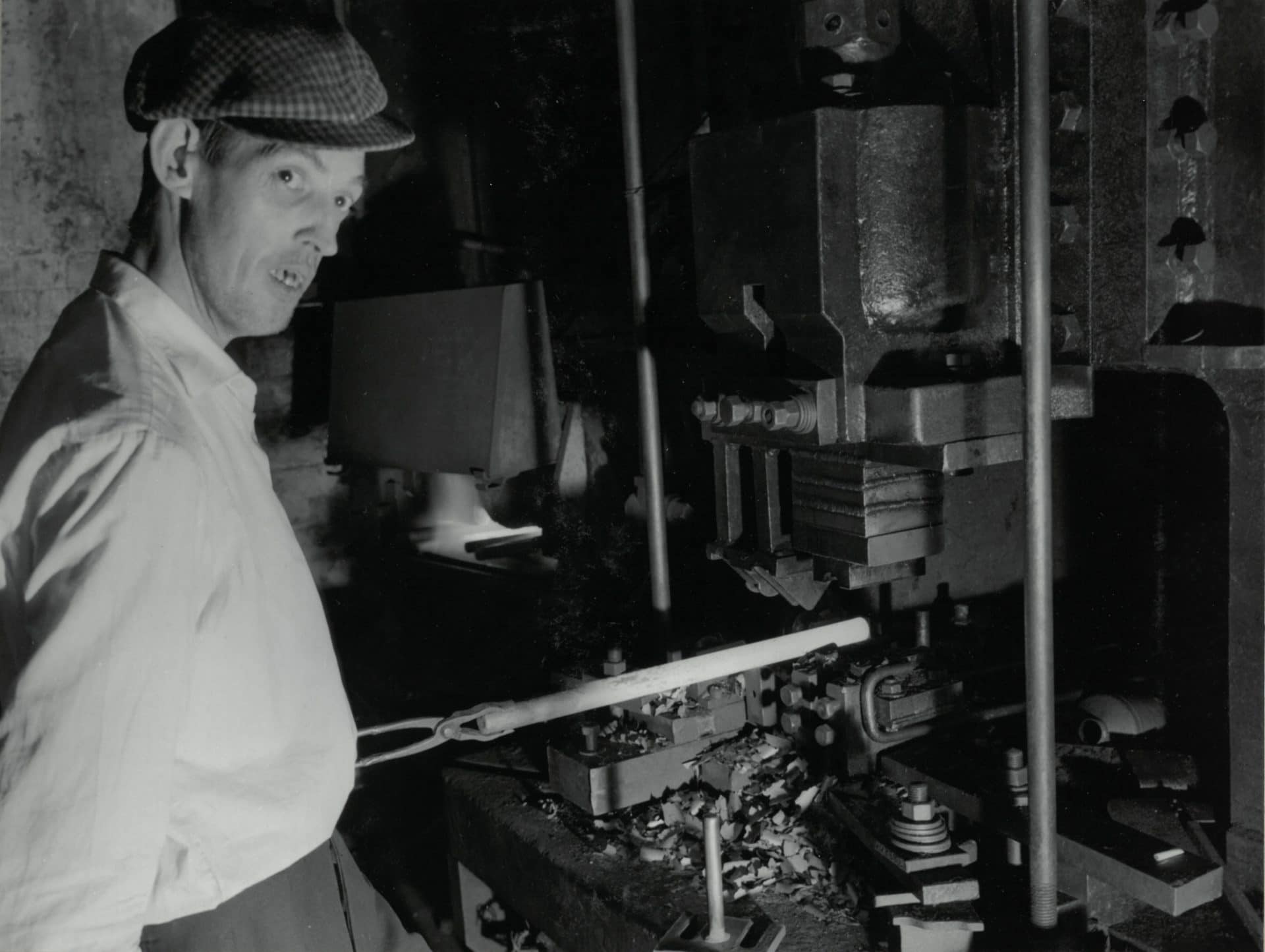
As the use of water generated power increased in the 12th century, the capacity of forging operations significantly grew both in terms of the quantity that could be produced and also the size of metals that could be forged. This was a direct result of innovations in machinery which saw water powered mechanical hammers and bellows lead to major efficiency gains across the industry.
The most significant change came in the 19th century as steam engines grew in popularity during the industrial revolution. The ability to harness electrical power meant that forging technology was no longer restricted to river locations for power. Open die and hand forging methods used during the early-19th century were instead replaced by powerful steam hammers and air hammers which are still commonly used today.
The first recorded metal to be forged was gold. After the gold was heated, a stone was used as a makeshift forging hammer to bash it into its new shape. This process of heating the metal and bashing it with an implement by hand continued for many thousands of years until other power sources were established.
Following the industrial revolution, World War II had major impacts on the forging industry. Demand for forged products drastically increased as the requirements for weapons surged throughout the war years. This paved the way for improvements in press equipment as it became apparent that investment in production techniques was required to keep up with demand.
The second half of the 20th century saw the growth of electrical induction heaters, leading to yet further greater production levels and enhanced dimension control of forged components.
Today, technological developments have led to the possibility of using computer-controlled hydraulic hammers as part of the forging process. Further investment in the industry is likely to focus on finding faults in production with computerised feedback loops being used to detect and prevent production problems before large quantities are produced that may require scrapping.
Tools & Equipment Used
-
Drop hammers: These are primarily used in drop forging. Hammers are used to deliver repeated impact blows, usually 'dropped' from above, which deforms pre-heated metal into the desired shape.
-
Forging presses: Presses are used to shape metal using compressive force. This typically allows for greater control over dimensional accuracy and consistency when compared to impact methods.
-
Closed dies: These are used in drop and upset forging, allowing the blacksmith to achieve a highly precise shape for the final component. This ensures exceptional product repeatability for batch orders.
-
Open die forging equipment: This includes the use of hammers and anvils, as well as flat or slightly contoured dies. This equipment is used in hand or open die forging methods, allowing metal to be shaped without fully encasing the material. This makes it suitable for large or bespoke components, as it involves lower tooling costs compared to closed dies, which require intricate detailing.
Open Die vs Closed Die Forging
It's important to understand that drop forging can be sub-categorised into two different forging methods: open die and closed die forging, and which you choose should be dependent on the requirements of the production:
Closed die forging is a process where the heated metal is completely enclosed between dies. In this process, the metal is forced to flow and solidify into the shape determined by the dies' contours, producing a highly precise metal component. This process is ideal for mass production of small to medium-sized metal parts, as it ensures exceptional product repeatability.
Open die forging, on the other hand, is a process where the metal is forced to flow into flat or simple contoured dies without being completely enclosed. The metal can be worked on multiple sides, providing the manufacturer with the flexibility to produce large or custom-made components. Although the accuracy of the component is not as high as in closed die methods, it is much more economical for low-volume production, as it avoids the higher tooling costs associated with closed dies.
By understanding the differences between these processes, manufacturers can choose the most appropriate process for their production needs, depending on whether their priority is large volume repeatability, or dimensional accuracy.
Materials Commonly Used
-
Carbon Steel: Widely used for structural and mechanical components. Higher carbon content increases hardness but reduces ductility.
-
Alloy Steel: Includes elements like chromium, nickel and molybdenum. This provides enhanced strength and fatigue performance for more demanding applications.
-
Stainless Steel: Ideal for components exposed to moisture or chemicals due to corrosion-resistant properties, although is slightly more difficult to forge due to higher strength at elevated temperatures.
-
Aluminum: Aluminium is more lightweight when compared to steel and is easier to forge. This makes it ideal for aerospace and automotive components where weight is a concern, but it is generally weaker and less wear-resistant than steel.
-
Copper & Copper Alloys: This material offers excellent thermal and electrical conductivity, and is therefore suitable for electrical components, but not for parts that demands high strength and toughness, as copper is softer than steel.
Benefits of Steel Forging
Steel is the most popular metal used in forging because of its strength and versatility. Steel has a wide range of alloys as listed above that can be used to create metal part with desired mechanical properties.
Hot forging is the most popular technique used in the manufacture of steel parts. It involves heating the metal above its recrystallisation temperature, allowing the steel to deform easily without cracking. This method aligns the internal grain structure of the steel with the shape of the steel part. This makes the final component stronger, tougher, and more fatigue-resistant than a cold-forged or cast steel part.
Advantages over other techniques:
Cold forging can produce parts with tighter tolerances and a smoother surface finish but at the cost of higher force being required. It also does not provide the same level of grain flow alignment, which can negatively impact strength.
Casting is easier for complex shapes but produces metal with random grain structure and potential voids or porosity, making cast parts weaker and more prone to fatigue than forged steel.
Contact B.B. Price for Custom Steel Forging Today
Get in touch with B.B. Price today for expert custom forged solutions. With over 100 years of experience in metalworking, we are industry-leaders in the field of steel forging. Our hot forging methods, which includes drop, hand and upset methods, entails the use of the very latest technology, combined with traditional blacksmithing practices. With this breadth of expertise, we can accommodate a wide range of project briefs.
We are just as capable fulfilling batch orders using drop forged and closed die methods as we are large and one-off components using hand and open die methods. Alongside forging, we also specialise in welding and steel fabrication, so rest assured whatever your project needs, B.B. has the expertise to meet them with skill and precision.
Locate your blacksmith near me or discover more about forging and the industry with B.B. Price today. As forging specialists, we are able to provide you with the best forged products in The Black Country, at a competitive rate. We understand that your deadlines are important, and that is why every project is handled with care. Find the right forging or steel forging near me today and get in touch with B.B. Price.
We are based in the Heart of The Black Country, the home of forging. With such a central location, we are able to supply all local areas, as well as UK-wide.
Locations we supply across the West Midlands: Birmingham | Cradley Heath | Halesowen | Dudley